

What Happens When Afib Goes Untreated?
Atrial fibrillation, commonly referred to as Afib, is the most common type of irregular heart rhythm. Approximately 10.5 million Americans have Afib, and that figure is projected to rise to over 12 million Americans by 2030. Because many Afib patients don’t exhibit symptoms, it’s common for the condition to go untreated for extended periods of time until it is diagnosed as part of a routine health exam. When it’s not properly managed, atrial fibrillation can increase your risk of stroke, heart failure and other serious cardiovascular complications.
What Is Afib?
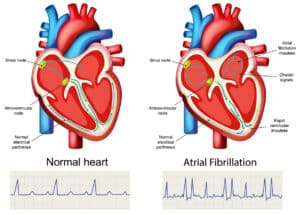
Atrial fibrillation is an arrhythmia (irregular heartbeat) that causes a fast, chaotic rhythm in the upper chambers of your heart. This can prevent your upper heart chambers from effectively contracting or pumping blood into the lower chambers. As a result, your heart’s lower chambers will also contract irregularly, resulting in the fast, chaotic heartbeat you experience.
While Afib is often asymptomatic, some potential symptoms you may experience include:
- A sensation that your heart is racing or pounding (heart palpitations)
- Dizziness or lightheadedness
- Extreme fatigue
- Shortness of breath
- Fainting
Common Complications Associated with Untreated Afib
 Regardless of whether you experience symptoms, Afib is a serious condition that should be managed properly. Failing to treat atrial fibrillation can lead to a variety of serious health complications.
Stroke
There is a strong correlation between atrial fibrillation and stroke. Individuals with Afib have a significantly higher risk of stroke. In addition, they often have more severe strokes, experience more serious complications and are more likely to suffer a fatal stroke.
When Afib isn’t properly managed, blood can pool in the upper chambers of the heart, increasing your risk of a blood clot. If you develop a blood clot that gets pumped out of your heart’s upper chambers, it can travel to other regions of the body. Depending on where the clot gets stuck in your circulatory system, it can block blood flow to the brain, lungs, kidneys, spleen or intestine. When a blood clot caused by Afib travels to the brain, the blockage of blood flow can trigger a stroke.
A stroke prevents your brain from receiving sufficient levels of oxygen, causing brain cells to die. It is a life-threatening emergency that requires immediate treatment.
Heart Failure
Untreated Afib can cause your heart to beat fast and irregularly. When this occurs for short periods of time, your upper heart chambers aren’t able to properly fill with blood, which can impact their ability to pump correctly. When your irregular heartbeat occurs for a longer duration, it forces your heart to work harder, which can weaken your heart muscle. Over time, this can lead to heart failure.
When you have heart failure, your heart cannot pump enough blood and oxygen to meet your body’s needs. This often causes blood to build up in other regions of your body such as your lungs, legs and feet.
Many of the most common symptoms of heart failure overlap with Afib symptoms, making it harder to connect them to heart failure in the early stages of the condition. Early warning signs of heart failure may include:
- Shortness of breath
- Fatigue
- Reduced ability to exercise
- Swelling in the legs, ankles or abdomen
If you begin exhibiting any of these symptoms, you should visit a cardiologist to determine their cause. Prompt diagnosis and treatment of both Afib and heart failure play an important role in managing these conditions.
Dementia and Cognitive Decline
Atrial fibrillation can reduce the amount of oxygen that reaches your brain, resulting in dementia and cognitive decline. Research has found that Afib patients often perform poorly on memory and learning tests. In addition, they often struggle with concentration and decision-making.
Treatment Options for Afib
 There are two primary goals of Afib treatment:
- Restore a more controlled heartbeat to reduce the strain on your heart
- Prevent blood clots to reduce your risk of stroke
Your specific Afib treatment plan will be determined by the cause of your irregular heartbeat, your symptoms and how long you’ve had the condition. Potential treatments may include:
- Medications
- Cardioversion therapy
- Catheter procedures
Medications
Common medications used to treat atrial fibrillation include:
- Blood thinners to reduce the risk of stroke from blood clots
- Beta blockers and calcium channel blockers to slow your heart rate
Cardioversion Therapy
Cardioversion therapy is a nonsurgical procedure performed to reset your heart rhythm. There are two different cardioversion therapy methods:
- Electrical Cardioversion – Electric shocks are sent to the heart through paddles or patches placed on your chest
- Drug Cardioversion – Oral or IV medication is administered to reset your heart rhythm
Catheter Procedures
Cardiac ablations are often recommended in situations where medications and cardioversion therapy aren’t able to effectively treat Afib. During a cardiac ablation, your cardiologist will place a flexible tube, called a catheter, through a blood vessel and guide it up into the heart. Sensors on the tip of the catheter apply heat or cold energy, creating tiny scars in your heart. Since electrical signals aren’t able to pass through these scars, cardiac ablation can block the faulty signals that cause atrial fibrillation.
In situations where you’re unable to take blood thinners, a left atrial appendage closure may be recommended. This procedure uses a catheter to guide a closure device to a small sac in the left upper heart chamber where blood clots from Afib most commonly form. Once inserted, the device remains in your heart permanently.
South Denver Cardiology Can Help
At South Denver Cardiology, we provide comprehensive diagnostic and treatment services for Afib. Our Arrhythmia Clinic is the premier treatment center for arrhythmias in Denver. The Afib treatments provided at our Arrhythmia Clinic will help you:
- Manage symptoms
- Treat other contributing health issues
- Prevent stroke
- Prevent hospitalization
We have some of the most experienced electrophysiologists in the area who can recommend the proper treatment plan to manage your Afib. Once your condition is under control, we’ll transition you from our Arrhythmia Clinic to the care of one of our cardiologists who will serve as your primary care provider moving forward.
Contact us today to schedule an appointment. South Denver Cardiology serves patients in Denver, Littleton and the surrounding areas.
Untreated Afib FAQs
What happens if atrial fibrillation is left untreated?
Untreated atrial fibrillation can increase your risk of stroke, heart failure, dementia and cognitive decline. Since many Afib patients don’t experience symptoms, the condition can go untreated for extended periods until it’s caught during a routine health exam or diagnostic testing.
Can Afib cause a stroke?
Yes. When Afib isn’t properly managed, blood can pool in the upper chambers of the heart, increasing your risk of a blood clot. If a clot travels to the brain and blocks blood flow, it can trigger a stroke. Individuals with Afib also tend to experience more severe strokes and face a higher risk of a fatal stroke.
Can untreated Afib lead to heart failure?
Yes. Untreated Afib can cause your heart to beat fast and irregularly, which can prevent your upper heart chambers from filling with blood properly and force your heart to work harder over time. This added strain can weaken your heart muscle and eventually lead to heart failure.
Does Afib affect memory or cause dementia?
Atrial fibrillation can reduce the amount of oxygen that reaches your brain, which has been linked to dementia and cognitive decline, including difficulty with memory, concentration and decision-making.
What are the treatment options for Afib?
Afib treatment options include medications such as blood thinners, beta blockers and calcium channel blockers, cardioversion therapy to reset your heart rhythm, and catheter procedures such as cardiac ablation or left atrial appendage closure. Your treatment plan depends on the cause of your irregular heartbeat, your symptoms and how long you’ve had the condition.
How is Afib diagnosed if it doesn’t cause symptoms?
Since many Afib patients don’t experience noticeable symptoms, the condition is often diagnosed during a routine health exam or through diagnostic testing performed for an unrelated reason.

- What Happens When Afib Goes Untreated? - September 4, 2026
- What Is Preventive Cardiology? - August 31, 2026
- 7 Hidden Risk Factors of Heart Disease Most People Ignore - July 9, 2026
Sign Up
As with any health concerns, your specific treatment program should be discussed thoroughly with your primary care physician as well as any specialists who may need to be consulted – like a cardiologist.
Sign Up